Digital KYC Simplified: A Deep Dive into Neokred's Innovation

By
Rohith Reji
2 Jun
5 Mins

In an era where the digital landscape is rapidly expanding, the financial industry is witnessing a profound transformation in the way it verifies customer identities. Traditional Know Your Customer (KYC) processes, known for their paperwork-intensive and time-consuming nature, are being replaced by innovative Digital KYC solutions. Here in this blog, Neokred will make you dive deep into the intricacies of Digital KYC, exploring its evolution, significance, technologies, implementation challenges, and the future it promises. So let us start and first look at the evolution of KYC.

Evolution of KYC

The evolution of Know Your Customer (KYC) processes has undergone a remarkable transformation over the years. Originating in a time dominated by manual paperwork, KYC involved customers physically submitting documents for identity verification. As the digital age dawned, the limitations of traditional KYC became apparent, prompting a shift toward electronic methods. Regulatory bodies globally tightened KYC requirements in response to heightened concerns about financial crimes and security threats. Digital KYC emerged as a solution, leveraging technology to streamline and enhance the accuracy of identity verification. This evolution is marked by the incorporation of innovative components such as biometric authentication, artificial intelligence, machine learning, and blockchain technology. The transition from paper to pixels not only accelerated the speed and efficiency of the onboarding process but also elevated customer experiences by allowing for secure and convenient digital interactions. In essence, the evolution of KYC reflects a dynamic response to the changing technological landscape, aligning with the imperative for more efficient, scalable, and secure identity verification methods in the digital era.

Understanding Digital KYC

Digital Know Your Customer (KYC) is a revolutionary approach to identity verification that leverages electronic methods instead of traditional, manual processes. In Digital KYC, advanced technologies such as biometric authentication, artificial intelligence, machine learning, and blockchain are employed to streamline and enhance the accuracy of the identification process. This digital transformation allows individuals and entities to verify their identities remotely, eliminating the need for physical paperwork and reducing onboarding times significantly. The multifaceted components of Digital KYC work cohesively to create a seamless, secure, and efficient onboarding experience. Beyond compliance with regulatory standards, Digital KYC contributes to an enhanced customer experience by providing a user-friendly, technologically driven solution to the age-old challenge of identity verification in the rapidly evolving digital landscape.

Now that you have understood KYC and how it evolved, it’s time to understand the technologies powering Digital KYC:

Technologies Powering Digital KYC

1. Biometric Authentication

  • Fingerprint Scanning: Utilizing unique fingerprint patterns for precise identification.
  • Facial Recognition: Analyzing facial features to confirm an individual's identity.
  • Iris Detection: Verifying identity through the distinctive patterns in the iris of the eye.

2. Artificial Intelligence (AI) and Machine Learning (ML)

  • Pattern Recognition: AI algorithms analyze vast datasets to recognize patterns and anomalies.
  • Predictive Analysis: ML models predict and adapt to evolving identification trends.
  • Behavioral Biometrics: Analyzing user behavior for continuous authentication.

3. Blockchain Technology

  • Decentralized Storage: Utilizing a distributed ledger for secure, tamper-proof storage of customer data.
  • Smart Contracts: Automating and ensuring the execution of predefined KYC processes.

4. Mobile Technology

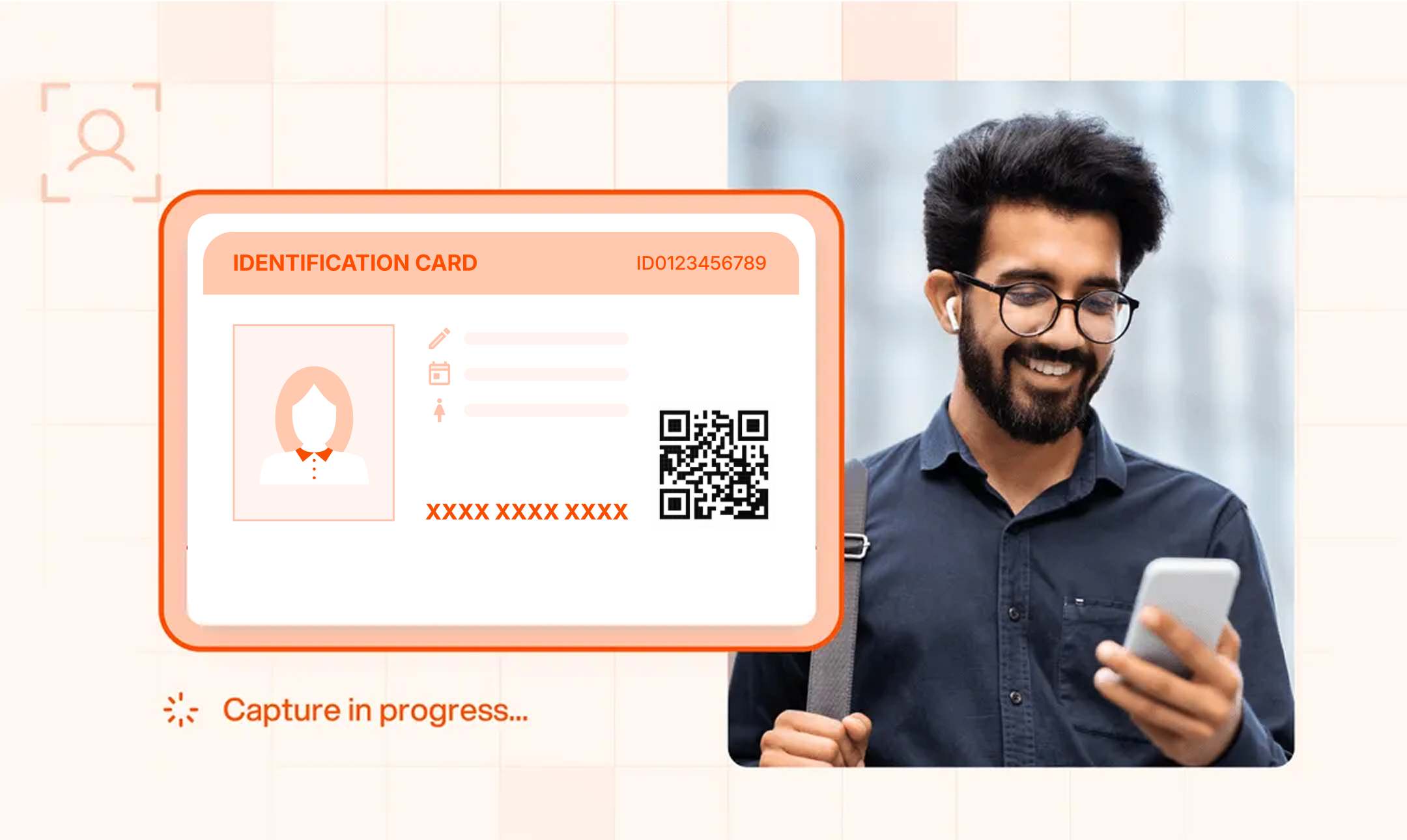
  • Document Capture: Allowing users to securely capture and submit identification documents.
  • Mobile Applications: Facilitating user-friendly interactions for KYC processes.

These technologies work in tandem, providing a robust and comprehensive approach to Digital KYC. The amalgamation of biometric, AI, and blockchain technologies, coupled with the convenience of mobile applications, results in a secure and efficient identity verification process in the rapidly advancing digital landscape.

Significance of Digital KYC

The significance of Digital KYC can be understood through its multifaceted advantages that extend beyond traditional KYC methods.

  1. Efficiency and Speed: Digital KYC revolutionizes onboarding processes by reducing the time it takes for individuals and entities to verify their identities. What once took days with traditional methods can now be accomplished in a matter of minutes.
  2. Enhanced Customer Experience: The seamless integration of Digital KYC offers customers unparalleled convenience. They can complete KYC requirements remotely, using their preferred digital devices. This user-friendly approach not only simplifies the onboarding process but also elevates the overall customer experience.
  3. Cost Reduction: Digital KYC leads to substantial cost reductions for businesses. Automation eliminates manual verification processes, decreases paperwork, and mitigates the costs associated with physical document storage. This resource optimization allows businesses to allocate their budget more efficiently and invest in other critical areas of development.
  4. Compliance and Security: In an era of evolving regulatory standards, Digital KYC ensures businesses remain compliant with global KYC regulations. The integration of advanced technologies, such as biometric authentication and secure data storage, enhances overall security, safeguarding against fraudulent activities and unauthorized transactions.
  5. Accessibility and Inclusivity: Digital KYC's integration with mobile devices makes identity verification accessible to a wider audience. This inclusivity ensures that individuals from diverse geographical locations can participate in the digital economy, fostering financial inclusion and expanding market reach for businesses.
  6. Digital Transformation Enabler: Digital KYC aligns with broader digital transformation initiatives within industries. By adopting advanced technologies, businesses not only streamline their KYC processes but also position themselves as innovative leaders in the digital landscape, enhancing their competitive edge.

In essence, the significance of Digital KYC lies in its ability to bring about efficiency, cost-effectiveness, regulatory compliance, and an enhanced user experience. Now at last let us see some of the future landscape of Digital Know Your Customer (KYC):

Future Landscape of Digital KYC

  1. Technological Innovations: Continuous advancements in biometric authentication, artificial intelligence, and blockchain technology will refine and optimize authenticity enhancement, security, and safety through Digital KYC processes. Innovations such as voice recognition and behavioral biometrics may become integral components.
  2. Global Standardization: As the demand for seamless, secure, and efficient identity verification grows globally, there is an inclination towards standardization. Industries may converge on common Digital KYC practices, creating a unified approach that transcends borders.
  3. Expanded Use Cases: Digital KYC will extend beyond traditional financial services, finding applications in sectors like healthcare, e-commerce, and telecommunications. The versatility of Digital KYC will enable businesses to enhance customer experiences across diverse domains.
  4. Enhanced Ethical Considerations: The ethical dimensions of Digital KYC will garner increased attention. Stricter regulations and industry standards will emerge to address issues like bias in AI algorithms, ensuring responsible data usage, and safeguarding privacy.
  5. Integration with Emerging Technologies: Integration with emerging technologies, such as 5G networks and the Internet of Things (IoT), will further augment Digital KYC capabilities. Enhanced connectivity and data exchange will contribute to a more robust and interconnected identity verification ecosystem.

A digital KYC solution is a comprehensive and technologically driven approach to identity verification, enabling businesses to efficiently and securely onboard customers while adhering to regulatory compliance. Simplified Digital KYC is a game-changer in finance and digital services. As businesses continue to embrace this digital frontier, the challenges and considerations highlighted here serve as guideposts for navigating the intricate landscape of digital identity verification. The future promises even more advancements, paving the way for a secure, efficient, and customer-centric approach to KYC in the digital age.

Conclusion

FAQs

No items found.
Verified
Build Frictionless
Customer Journeys
Get Started

Related Posts

View All
5 Mins

What Is a UPI Soundbox and Why It’s Transforming Retail Payments in India

What Is a UPI Soundbox and Why It’s Transforming Retail Payments in India

What Is a UPI Soundbox?

A UPI Soundbox is a compact speaker device placed at a merchant’s counter. When a customer pays using UPI by scanning a QR code, the device announces the payment amount out loud  for example:

“Received ₹250.”

This removes the need for merchants to check SMS messages or mobile apps manually.

The device is linked directly to the merchant’s UPI ID and receives real-time transaction confirmations.

How Does a UPI Soundbox Work?

The process is simple:

  1. The customer scans the merchant’s UPI QR code.
  1. The payment is completed via a UPI app.
  1. The transaction is processed through the UPI network.
  1. The soundbox receives confirmation.
  1. The device announces the amount instantly.

Most soundboxes use built-in SIM connectivity, so merchants do not need to depend on their personal phones for alerts.

Why UPI Soundboxes Were Introduced

As UPI adoption surged across India, merchants faced new challenges:

  • Fake payment screenshots
  • Delayed SMS confirmations
  • Time wasted checking phones
  • Disputes over whether payment was received

UPI Soundboxes were introduced to provide immediate, verified confirmation reducing friction at the counter.

Key Benefits for Retailers

Instant Verification

No need to check a mobile device repeatedly.

Fraud Reduction

Audio confirmation linked directly to the UPI network reduces screenshot fraud.

Faster Checkout

Transactions are confirmed in seconds, improving customer flow.

Hands-Free Convenience

Merchants can continue serving customers without interrupting work.

Why UPI Soundboxes Are Transforming Retail Payments

India’s retail sector includes millions of small merchants who are rapidly adopting digital payments.

UPI Soundboxes support this shift by:

  • Increasing merchant confidence in digital transactions
  • Encouraging customers to pay via UPI
  • Reducing payment disputes
  • Improving operational efficiency

For kirana stores, street vendors, pharmacies, and restaurants, the device simplifies digital acceptance.

The UPI Soundbox may look like a small device, but its impact on India’s retail ecosystem is significant.

By delivering instant voice confirmation, it has improved trust, speed, and transparency in digital transactions.

As retail payments continue to shift toward UPI and real-time digital acceptance, merchants increasingly need reliable, connected payment infrastructure that reduces friction at checkout.

For businesses looking to deploy secure, scalable UPI Soundbox solutions and modern payment devices, Neokred’s Soundbox infrastructure is designed to support real-time transaction confirmation, multi-language announcements, and seamless integration into today’s retail environments.

Digital payments are no longer optional and the right infrastructure makes all the difference.

5 Mins

The Evolution of POS Systems: From Card Swipes to Smart Retail Infrastructure

The Evolution of POS Systems: From Card Swipes to Smart Retail Infrastructure

What Is a POS System?

A POS (Point of Sale) system is the hardware and software used by businesses to process customer transactions.

Traditionally, POS systems were used only to:

  • Swipe debit and credit cards
  • Authorise transactions
  • Print receipts

Today, POS systems have become multi-functional retail platforms that manage payments, data, and operations together.

Phase 1: The Era of Card Swipe Machines

In the early days of digital payments, POS machines were simple card terminals.

They allowed merchants to:

  • Accept debit and credit cards
  • Authorise transactions via bank networks
  • Generate printed receipts

These devices were standalone and focused purely on card payments. They did not support analytics, inventory management, or multi-channel integration.

Phase 2: EMV, Contactless & Multi-Payment Acceptance

As payment technology evolved, POS systems began supporting:

  • EMV chip-based cards
  • Contactless tap payments
  • NFC-enabled cards
  • Mobile wallets

This shift improved security and speed while expanding customer payment choices. POS machines became more secure and compliant with global payment standards.

Phase 3: The Rise of UPI and QR-Based Payments

India’s digital payment revolution accelerated with UPI.

Modern POS systems began integrating:

  • UPI QR acceptance
  • Real-time transaction processing
  • Instant payment confirmation

Retailers were no longer limited to card payments. POS infrastructure had to adapt to a multi-mode environment. This marked a major turning point in retail payments.

Phase 4: Smart POS and Connected Retail Infrastructure

Today’s POS systems are no longer just payment terminals.

They function as smart retail infrastructure by offering:

  • Multi-payment acceptance (cards, UPI, wallets)
  • Cloud-based reporting
  • Inventory management integration
  • GST-compliant billing
  • Customer data insights
  • Digital reconciliation

Modern POS devices are often Android-based, app-enabled, and connected to cloud dashboards. Retailers can now track sales in real time, manage stock, and analyse performance all from a single system.

Why POS Systems Had to Evolve

Several factors drove the transformation:

1. Growth of Digital Payments

India’s rapid adoption of cards, UPI, and wallets required flexible POS solutions.

2. Need for Faster Checkout

Retail environments demand speed. Integrated systems reduce friction and queue times.

3. Data-Driven Retail

Retailers now rely on sales analytics, demand forecasting, and digital reconciliation.

POS systems became a data engine, not just a payment tool.

4. Omnichannel Commerce

Businesses operate both online and offline. Modern POS systems help unify transactions across channels.

What Makes a POS System “Smart” Today?

A smart POS system typically includes:

  • Multi-mode payment support
  • Cloud connectivity
  • App-based functionality
  • Real-time reporting
  • Secure transaction processing
  • Integration with accounting tools

It serves as the central operational hub of a retail business.

The Future of POS Systems in India

POS infrastructure is expected to become even more intelligent.

Emerging trends include:

  • AI-driven sales insights
  • Integrated loyalty programs
  • Contactless-first environments
  • Embedded financing options
  • Seamless UPI integration

As retail modernises, POS systems will continue to move from standalone devices to fully integrated digital ecosystems.

POS systems have evolved from simple card terminals to intelligent retail infrastructure that powers payments, reporting, and operational efficiency.

In today’s digital economy, businesses require POS machines that support multiple payment modes, real-time reconciliation, and connected retail operations.

Modern POS infrastructure must be secure, scalable, and adaptable to UPI-driven retail environments.

Neokred’s POS machines and integrated Soundbox solutions are built to support this next phase of smart retail enabling merchants to accept digital payments seamlessly while maintaining operational visibility and reliability.

As retail continues to digitise, choosing the right POS infrastructure becomes a strategic decision, not just a transactional one.

5 Mins

Consent Under the DPDP Act: What Businesses Must Build

Consent Under the DPDP Act: What Businesses Must Build

Why Consent Is Central to the DPDP Act

The DPDP Act makes lawful processing of personal data conditional on valid consent (in most business use cases).

Consent is no longer symbolic. It is enforceable and accountable.

The shift is clear: From collecting agreement to engineering proof.

What the DPDP Act Requires for Valid Consent

Consent must be:

  • Free from coercion or dark patterns
  • Specific to clearly defined purposes
  • Informed through transparent notices
  • Unambiguous through clear affirmative action
  • Revocable as easily as given
  • Verifiable through structured records

If any one of these elements is missing, consent may not meet compliance standards.

What Businesses Must Build to Comply

Understanding the law is not enough. Systems must support it. To meet DPDP consent requirements, businesses must implement:

Structured Consent Capture

Consent must be stored purpose-wise, not as a single “accepted” flag.

Purpose Mapping

Each processing activity must align with a declared purpose. Secondary use without fresh consent creates compliance risk.

Version Tracking

If consent language changes, the system must record which version each user agreed to.

Consent Lifecycle Management

Consent is dynamic. Systems must track:

  • Given
  • Updated
  • Withdrawn
  • Expired

Withdrawal Enforcement

Withdrawal must be easy and must automatically restrict further processing. If withdrawal does not propagate across systems, compliance gaps appear.

Audit-Ready Consent Logs

Businesses must be able to produce:

  • Timestamp of consent
  • Notice version
  • Purpose mapping
  • Current consent status

This must be exportable and regulator-ready.

Manual records or fragmented systems create operational risk.

Why Most Businesses Are Underprepared

Many organisations believe they are compliant because they:

  • Have a cookie banner
  • Store a timestamp
  • Mention consent in privacy policy

But DPDP requires structured, enforceable consent infrastructure.

Common gaps include:

  • No purpose-level tagging
  • No real-time consent validation
  • No automated withdrawal propagation
  • No audit-ready consent exports
  • No integration between frontend consent and backend processing

Consent that cannot be demonstrated is legally fragile.

Consent Is Now Infrastructure

The DPDP Act transforms consent into a technical function.

Legal defines requirements. Product designs the interface. Engineering must build enforceable systems.

Consent must now exist as:

  • Structured data
  • Processing rules
  • Validation checkpoints
  • Automated lifecycle logic
  • Continuous monitoring

This is where many businesses struggle because consent was never built as infrastructure.

The Role of Consent Management Platforms

To meet DPDP standards at scale, businesses increasingly require dedicated consent management systems that:

  • Capture purpose-specific consent
  • Maintain version-controlled notices
  • Enable easy withdrawal
  • Track consent lifecycle events
  • Generate audit-ready reports
  • Integrate with backend systems

Without a structured consent management layer, organisations often rely on patchwork solutions across marketing tools, product databases, and CRM systems.

That fragmentation increases compliance risk.

Building DPDP-Ready Consent Architecture

A DPDP-aligned consent system should:

  • Separate purposes clearly
  • Ensure equal prominence of accept and reject options
  • Provide user-accessible preference dashboards
  • Store consent logs in structured, queryable formats
  • Trigger automated updates when consent changes
  • Support compliance reporting instantly

Purpose-built platforms such as Blutic are designed to support this transition transforming consent from a superficial banner into a backend compliance engine.

Blutic enables:

  • Purpose-based consent capture
  • Structured consent logging
  • Real-time withdrawal workflows
  • Version-controlled notices
  • Audit-ready reporting aligned with DPDP expectations

Rather than retrofitting compliance into existing systems, businesses can integrate consent management as a foundational layer.

Consent under the DPDP Act is no longer a user interface element.

It is compliance infrastructure.

Businesses must build systems that:

  • Capture consent clearly
  • Map it to defined purposes
  • Track lifecycle changes
  • Enforce withdrawal automatically
  • Generate audit-ready proof

Organisations that treat consent as documentation risk exposure. Those that engineer consent into their systems build resilience.

As DPDP enforcement matures in India, businesses that implement structured consent architecture through specialised platforms like Blutic position themselves for scalable, regulator-ready compliance without disrupting user experience.

In the DPDP era, consent is not collected. It is built.

Ready to take your customer experience and product to next level with Neokred